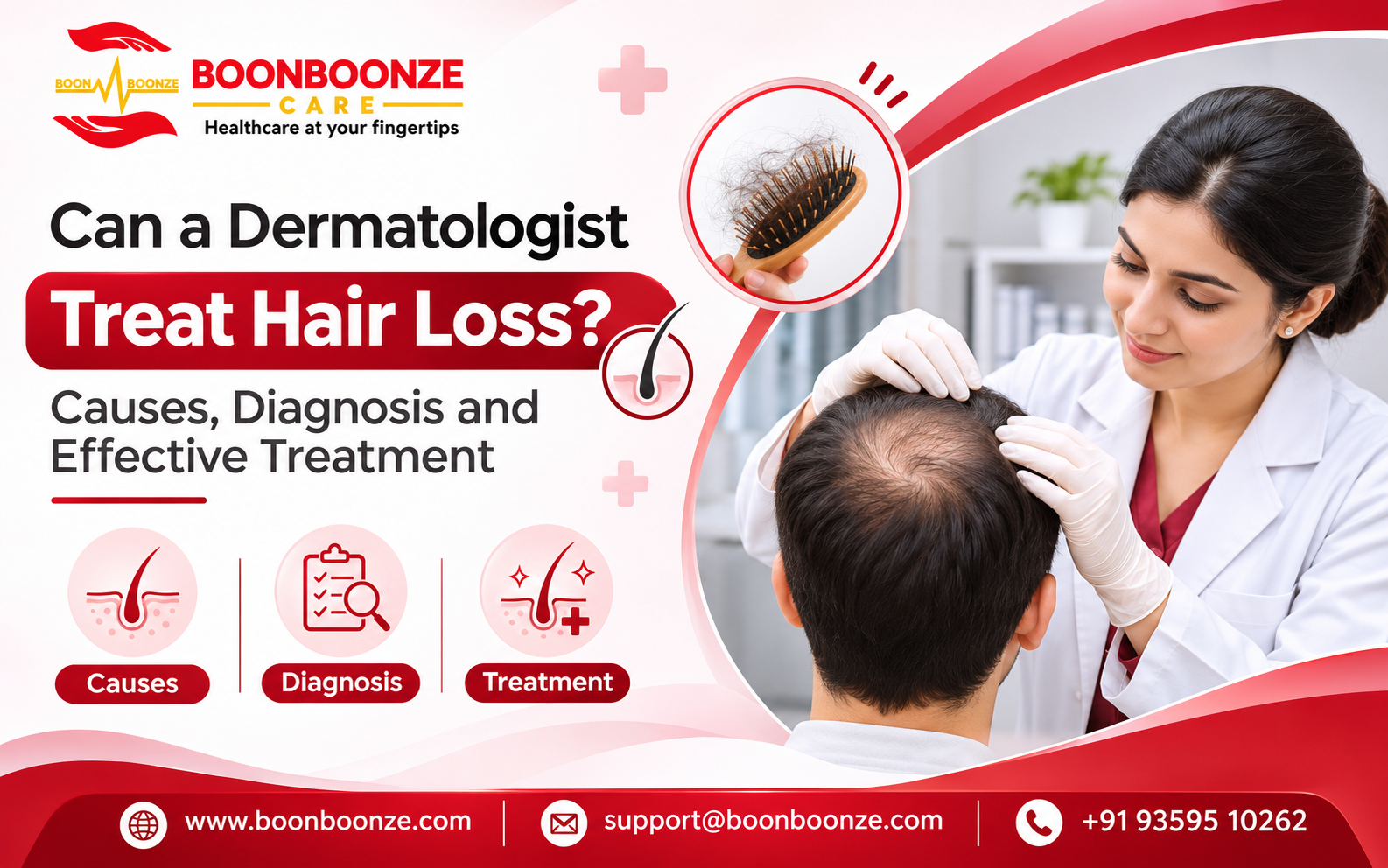
Hair loss is a common concern affecting both men and women. Whether it is excessive hair shedding, a receding hairline, thinning hair, or visible bald patches, experiencing hair loss can affect confidence and overall well-being. While occasional hair shedding is normal, continuous or excessive hair loss may indicate an underlying health or scalp condition that requires medical attention.
Many people try different shampoos, hair oils, home remedies, and over-the-counter products to control hair fall. However, these solutions may not address the actual cause. This is where a dermatologist can help. A dermatologist is a qualified medical professional who specialises in diagnosing and treating conditions related to the skin, hair, and nails.
If you are experiencing persistent hair fall, consulting a Dermatologist in Delhi can help you understand the underlying cause and explore suitable treatment options. But can a dermatologist really treat hair loss? What treatments are available, and when should you seek professional advice?
Let's understand everything you need to know.
What Is a Dermatologist and How Can They Help with Hair Loss?
A dermatologist is a medical specialist trained to diagnose and manage conditions affecting the skin, scalp, hair, and nails. Since hair grows from follicles located in the scalp, dermatologists have the medical knowledge to identify many different types of hair loss.
Hair loss can occur due to genetics, hormonal changes, nutritional deficiencies, stress, medical conditions, infections, or inappropriate hair-care practices.
A qualified dermatologist can:
Examine your scalp and hair follicles.
Identify the possible cause of excessive hair fall.
Diagnose scalp infections and inflammatory conditions.
Recommend appropriate medications and treatments.
Identify nutritional deficiencies when suspected.
Monitor hair growth and treatment progress.
Suggest preventive measures to reduce further hair damage.
Consulting the Best Dermatologist in Delhi can help you receive an individualised treatment plan based on your hair condition, medical history, and overall health.
What Are the Common Causes of Hair Loss?
Understanding the cause of hair loss is the first step towards effective treatment. Hair fall does not have one universal cause. Different factors can contribute to hair thinning and excessive shedding.
1. Genetic Hair Loss
Genetic hair loss, also known as androgenetic alopecia, is one of the most common causes of hair thinning in men and women. It can result in a receding hairline, thinning around the crown, or a widening hair part.
2. Hormonal Changes
Hormonal fluctuations can affect hair growth. Conditions such as thyroid disorders, pregnancy-related changes, and polycystic ovary syndrome (PCOS) may contribute to hair thinning in some individuals.
3. Stress and Lifestyle Factors
Physical or emotional stress can trigger a condition called telogen effluvium, in which more hair follicles enter the resting phase, leading to increased shedding. Major illness, surgery, rapid weight loss, and other physical stressors can also contribute.
4. Nutritional Deficiencies
Insufficient iron, protein, zinc, and certain vitamins may affect healthy hair growth. A healthcare professional may recommend appropriate investigations to identify deficiencies.
5. Scalp Infections and Skin Conditions
Fungal infections, psoriasis, seborrheic dermatitis, and other inflammatory scalp conditions can affect scalp health and contribute to hair loss.
6. Improper Hair-Care Practices
Frequent chemical treatments, excessive heat styling, tight hairstyles, and aggressive brushing may damage hair shafts and sometimes contribute to hair loss.
Identifying the underlying reason is important because different causes require different treatment approaches.
How Does a Dermatologist Diagnose Hair Loss?
When you visit a Skin Doctor in Delhi for hair fall, the first step is usually a detailed consultation and scalp examination.
Your dermatologist may follow several steps to understand your condition.
1. Medical History and Consultation
The doctor may ask questions about:
When your hair loss started.
Whether hair fall is sudden or gradual.
Your family history of hair loss.
Recent illnesses, surgery, or stressful events.
Your diet and lifestyle.
Current medications and existing health conditions.
2. Scalp and Hair Examination
The dermatologist examines your scalp to identify thinning, bald patches, inflammation, scaling, redness, or signs of infection.
3. Hair Pull Test
A gentle hair-pull test may help the doctor assess whether excessive shedding is occurring.
4. Blood Tests
If an underlying medical condition or nutritional deficiency is suspected, the dermatologist may recommend blood tests to assess factors such as iron levels, thyroid function, or other relevant parameters.
5. Scalp Biopsy or Additional Tests
In selected cases, a scalp biopsy or other specialised investigations may be required to identify the exact type of hair loss.
An accurate diagnosis helps the dermatologist select the most appropriate treatment instead of relying on guesswork.
What Hair Loss Treatments Can a Dermatologist Recommend?
There is no single treatment that works for everyone. The recommended approach depends on the type, severity, and cause of hair loss.
Here are some commonly used treatment options.
1. Topical Treatments
Topical medications such as minoxidil may be recommended for certain types of hair loss. They can help stimulate hair growth and slow further thinning in suitable patients.
The doctor will explain the correct application, expected results, and possible side effects.
2. Prescription Medications
Certain prescription medicines may help manage specific types of hair loss. For example, finasteride may be considered for selected patients with male pattern hair loss, while other medicines may be prescribed for particular hormonal or inflammatory conditions.
These medications should only be used under appropriate medical supervision.
3. Platelet-Rich Plasma (PRP) Therapy
PRP therapy is a procedure in which a small blood sample is processed to separate platelet-rich plasma. The prepared plasma is then injected into selected areas of the scalp.
It may be considered for certain patients with hair thinning. However, results vary, and the dermatologist must assess whether it is suitable.
4. Corticosteroid Injections
For certain inflammatory or autoimmune hair-loss conditions, such as patchy alopecia areata, a dermatologist may recommend corticosteroid injections.
These treatments help manage inflammation around the affected hair follicles.
5. Laser Therapy
Low-level laser therapy may be considered for some forms of hereditary hair loss. It uses controlled light energy and generally requires multiple sessions.
Its effectiveness varies between individuals, and further assessment is important before starting treatment.
6. Hair Transplant Consultation
For selected individuals experiencing permanent hair loss due to pattern baldness, a hair transplant may be an option. A specialist can assess hair density, donor areas, medical suitability, and realistic expectations before recommending the procedure.
It is important to remember that not every treatment is suitable for every patient. A dermatologist will recommend options according to your individual condition.
When Should You Visit a Dermatologist for Hair Loss?
Occasional hair shedding is normal. However, you should consider professional medical advice if you experience:
Sudden or excessive hair shedding.
Visible thinning or a receding hairline.
Round or irregular bald patches.
Persistent scalp itching, redness, or irritation.
Painful or inflamed scalp areas.
Hair loss accompanied by changes in your skin or nails.
Hair loss that continues despite changes in hair-care habits.
Early consultation can help identify treatable conditions and reduce the risk of further hair damage.
How to Find the Best Dermatologist Near Me?
Finding the right specialist is important for receiving appropriate treatment and guidance. If you are searching for a Dermatologist Near Me or the Best Skin Specialist Near Me, consider the following factors:
1. Check Medical Qualifications
Look for a qualified dermatologist with appropriate medical training and experience in managing hair and scalp conditions.
2. Consider Relevant Experience
Choose a specialist who has experience diagnosing different types of hair loss and recommending evidence-based treatments.
3. Review Consultation Facilities
Check whether the doctor offers in-person appointments, online consultations, and appropriate diagnostic support.
4. Understand the Treatment Approach
A good specialist should explain your diagnosis, available treatment options, potential side effects, and expected timelines.
5. Check Patient Feedback
Patient reviews and experiences can help you understand the consultation process and communication quality.
If you are looking for a Dermatologist in Delhi, comparing specialist profiles and consultation options can help you make a more informed decision.
Is Online Dermatologist Consultation Effective for Hair Loss?
Yes, an Online Dermatologist Consultation can be a convenient first step for people experiencing hair fall, scalp irritation, or hair thinning.
Through an online consultation, you may be able to:
Discuss your hair-loss concerns.
Share photographs of your scalp or affected areas.
Explain your symptoms and medical history.
Receive initial medical guidance.
Understand whether an in-person examination or diagnostic test is required.
Discuss follow-up care and treatment progress.
However, online consultation has certain limitations. A physical scalp examination, dermoscopy, blood tests, or biopsy may be necessary for an accurate diagnosis in some cases.
A dermatologist can help determine whether your condition can be initially assessed online or requires an in-person visit.
What Is the Importance of Professional Skin Treatment in Delhi?
Hair loss and scalp conditions can sometimes be associated with broader dermatological problems. Professional Skin Treatment in Delhi can help individuals address concerns such as acne, pigmentation, eczema, fungal infections, psoriasis, allergies, and other skin conditions.
A qualified dermatologist can evaluate both your scalp and skin concerns and recommend appropriate treatment.
Instead of experimenting with multiple products or following unverified online remedies, professional guidance helps you make informed healthcare decisions.
Tips to Maintain Healthy Hair and Reduce Hair Damage
Along with medical treatment, maintaining healthy hair-care habits can support overall scalp and hair health.
Here are some useful tips:
Eat a balanced diet: Include adequate protein, vegetables, fruits, and nutrient-rich foods.
Avoid excessive heat styling: Reduce frequent use of straighteners, curling irons, and high-heat dryers.
Choose suitable hair-care products: Use products appropriate for your scalp and hair type.
Avoid tight hairstyles: Frequent pulling and tension can damage hair follicles.
Manage stress: Maintain a balanced routine and get adequate sleep.
Avoid unnecessary supplements: Take vitamins and minerals only when recommended based on your nutritional needs.
Follow medical advice: Use prescribed treatments consistently and attend follow-up appointments.
Remember that healthy hair growth takes time. Consistency and the right medical guidance are important.
How Boonboonze Care Can Help You Access Healthcare
Finding the right healthcare professional should be simple and convenient. Boonboonze Care is an online healthcare booking and service aggregation platform designed to connect users with healthcare services through one convenient platform.
Whether you are looking for a specialist consultation, diagnostic services, or other healthcare support, Boonboonze Care aims to make accessing healthcare more convenient.
Explore healthcare services and discover convenient ways to connect with healthcare providers.
Visit www.boonboonze.com to learn more about Boonboonze Care.
Conclusion
So, can a dermatologist treat hair loss? Absolutely. Dermatologists are trained to diagnose different types of hair and scalp conditions and recommend suitable treatment options.
Whether your hair loss is caused by genetics, hormonal changes, stress, nutritional deficiencies, or scalp infections, identifying the underlying cause is essential.
If you are experiencing persistent hair fall, consider consulting a qualified dermatologist rather than relying only on home remedies or unverified products. Early diagnosis, appropriate treatment, and consistent follow-up can make a meaningful difference in managing hair loss.
Take the first step towards better hair and scalp health with professional medical guidance.
Frequently Asked Questions (FAQs)
1. Can a dermatologist really treat hair loss?
Yes. Dermatologists can diagnose different types of hair loss and recommend suitable treatments, including topical medications, prescription medicines, PRP therapy, injections, and other options depending on the cause.
2. When should I visit a dermatologist for hair fall?
You should consult a dermatologist if you experience sudden or excessive hair shedding, visible thinning, bald patches, persistent scalp irritation, or hair loss that continues over time.
3. Can a dermatologist help with hair regrowth?
Yes. Depending on the underlying cause, a dermatologist may recommend treatments that help stimulate hair regrowth or prevent further hair loss. Results vary from person to person.
4. How do I find the Best Dermatologist in Delhi?
Check the dermatologist's medical qualifications, experience, treatment approach, consultation facilities, and patient feedback before selecting a specialist.
5. Is an Online Dermatologist Consultation suitable for hair loss?
Yes. Online consultation can help you discuss symptoms, share photographs, and receive initial medical guidance. However, some conditions require an in-person examination or diagnostic tests.
6. What tests might a dermatologist recommend for hair loss?
Depending on your symptoms, a dermatologist may recommend blood tests to evaluate iron levels, thyroid function, or nutritional deficiencies. A scalp examination or biopsy may also be required in selected cases.
7. Does stress cause hair loss?
Yes. Significant physical or emotional stress can trigger telogen effluvium, a condition that causes increased hair shedding. Hair growth may recover once the underlying trigger is addressed.
8. Is PRP therapy effective for hair loss?
PRP therapy may help certain individuals with hair thinning. However, its effectiveness varies, and a dermatologist should assess your condition before recommending it.
9. Can nutritional deficiencies cause hair fall?
Yes. Deficiencies in nutrients such as iron, zinc, and protein may contribute to hair loss. A healthcare professional can recommend appropriate tests and supplements when necessary.
10. Can hair loss be permanently cured?
It depends on the cause. Some types of hair loss are reversible, while others require ongoing management. Early diagnosis and appropriate treatment can help improve outcomes.